Saudi Arabia records $1.54bln in POS transactions in one week UAE non-oil growth hits fastest pace since December 2024, PMI shows Oman’s non-oil exports rise 11.4% to $9.3bln, re-exports jump 20% UAE participates in second G20 Finance Ministers and Central Bank Governors meeting Saudi Arabia and Syria sign 4 pacts to boost cooperation in transport and logistics sectors Geological assets drive mining, manufacturing growth in Fujairah RAK Chamber explores trade, investment opportunities at UAE-Lebanon Business Forum Saudi Arabia agrees to raise Pakistani agricultural and food exports to $3bln UAE investment council launches data tools to boost overseas investment Oman's public revenue rises 13% to $17.2bln in first half of 2026 Saudi Arabia’s construction costs rise 2.3% in July 2026 ADIB provides $37mln Islamic financing for Glasgow logistics hub Oman’s tea and coffee imports hit record highs Total value of Bahraini exports hit $5.04bln Oman: ARA eyes Q3 2027 gas pipeline launch Oman: Sohar International establishes innovation hub at Terminal 11 to support fintech growth Bahrain's Benefit unveils Digital Direct Debit service Saudi: Civil Defense requires third-party insurance for licensing and renewals of certain activities Saudi PIF annualised total shareholder returns fall to 5.8% as some assets lose value Saudi Aramco offers crude outside Hormuz to some Asian refiners, sources say Ten agreements signed to localise electrical transformer component manufacturing in Oman Khareef lifts Salalah Airport passenger arrivals by 8% Fuel tanker grounding: NCEM activated in Oman Oman to develop four industrial cities under Five-Year Development Plan 2026-2030 Saudi Arabia breaks into world’s top 10 for private AI investment: World Bank report Kuwait Petroleum Corporation posts three-year profit high of $6.9bln in FY 25/26 HSBC Private Bank appoints Feras Al Jaramani to lead its UAE Market UAE extends small business relief for corporate tax until December 2029 Saudi business sector surges with 46,900 new companies in 1H 2026 Solar power set for strong growth in Qatar

Log in

عربي

Media Centre

Home » Media Centre

Emerging economies will continue driving agricultural markets: OECD-FAO Agricultural Outlook

Emerging economies will continue driving agricultural markets: OECD-FAO Agricultural Outlook

Emerging economies will continue driving agricultural markets: OECD-FAO Agricultural Outlook

Jul 04, 2024

PARIS - Emerging economies have increasingly driven global agricultural market developments over the last 20 years and are projected to continue to do so over the next decade, according to a report released on Tuesday by the Food and Agriculture Organisation of the United Nations (FAO) and the Organisation for Economic Cooperation and Development (OECD).

The OECD-FAO Agricultural Outlook 2024-2033 is the key global reference for medium-term prospects for agricultural commodity markets, and this year’s edition marks the 20th edition of the joint publication.

For two decades, the report has analysed trends in the demographic and economic drivers of agricultural commodity supply and demand, projected the shifts in production and consumption locations, and assessed the resulting changes in international agricultural trade patterns.

A notable shift expected over the coming decade is the increasing role of India, Southeast Asia and Sub-Saharan Africa and the declining role played by China. While China accounted for 28 percent of growth in global consumption of agriculture and fisheries in the previous decade, its share of additional demand over the coming decade is projected to fall to 11 percent, due to declining population, slower income growth and stabilisation of nutrition patterns.

India and Southeast Asian countries are projected to account for 31 percent of global consumption growth by 2033, driven by their growing urban population and increasing affluence.

Among predominantly low-income regions, Sub-Saharan Africa is projected to contribute a sizeable share of additional global consumption (18 percent), primarily due to population growth-driven demand for food.

Total agricultural and fisheries consumption is projected to grow by 1.1 percent annually over the next decade, with nearly all of the additional consumption projected to occur in low- and middle-income countries.

Food calorie intake is expected to increase by 7 percent in middle-income countries, largely due to greater consumption of staples, livestock products and fats.

Calorie intake in low-income countries will grow at 4 percent, too slowly to achieve the Sustainable Development Goal target of zero hunger by 2030.

“The Outlook confirms the need to implement strategies that bridge productivity gaps in low- and middle-income countries to increase domestic production and boost farmers’ incomes,” said FAO Director-General QU Dongyu.

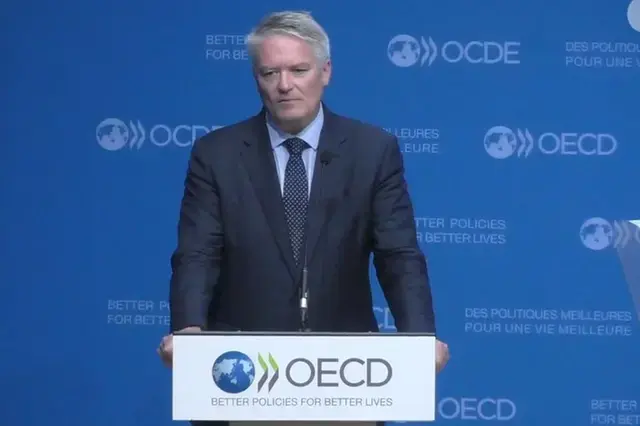
OECD Secretary-General Mathias Cormann stated, “Over the coming decade, the volumes of agricultural commodities traded globally is expected to increase between net exporting regions and net importing regions, but with regional shifts reflecting increased global consumption in India and Southeast Asian countries,”

He added that well-functioning agricultural markets, reducing food loss and waste, and more productive and less polluting forms of production will remain critically important for global food security and to ensure rural livelihoods can and do benefit from global agrifood value chains.